Air Force awards WindBorne up to $50 million for its balloon data
The $49 million deal pays WindBorne only as the Air Force orders regional weather data from its roughly 700-balloon fleet, with $1.7 million ordered already.
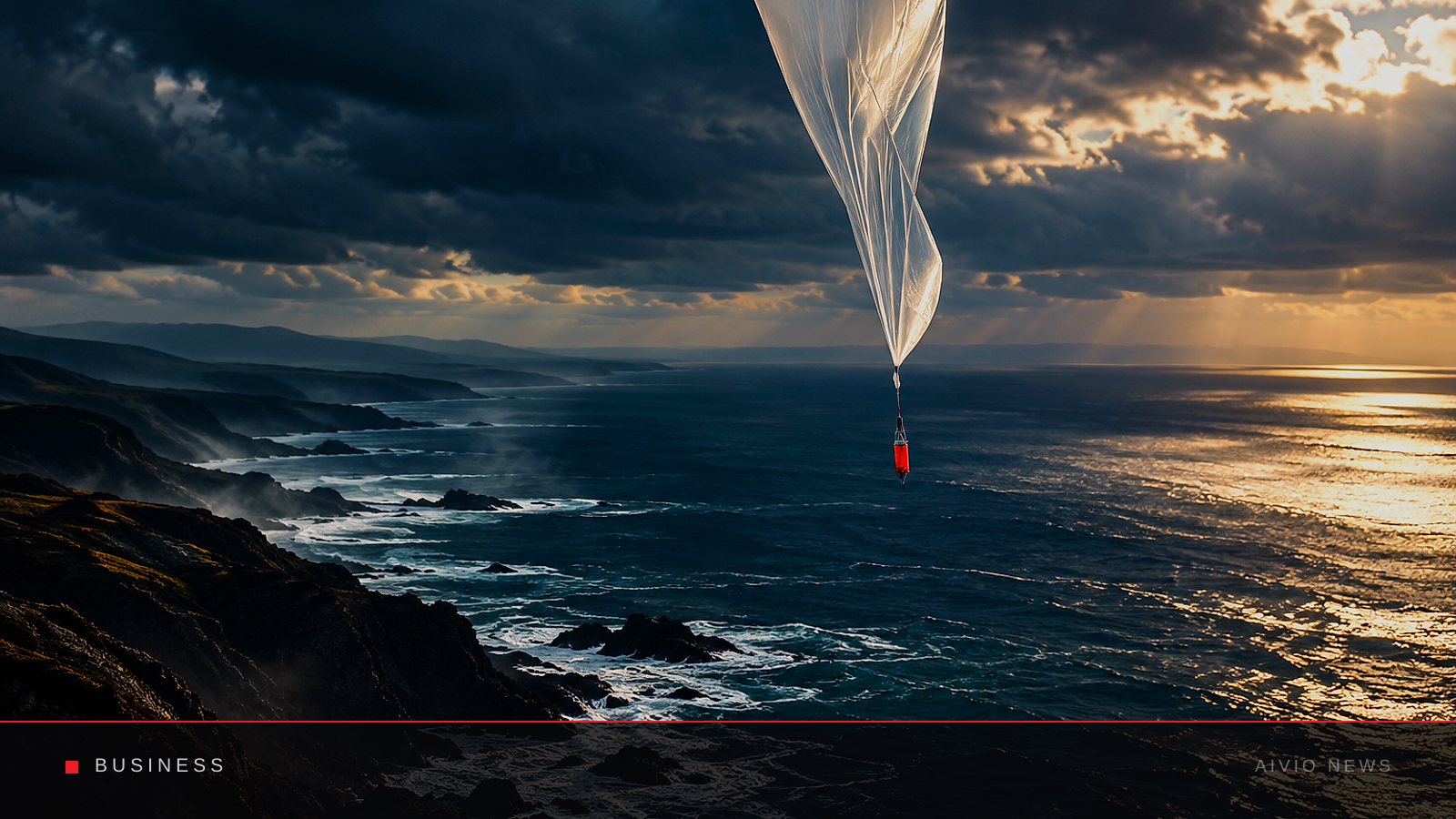
The U.S. Air Force has agreed to buy atmospheric data from WindBorne Systems’ fleet of autonomous weather balloons, under a contract that could be worth close to $50 million. It is the largest contract WindBorne, based in Redwood City, California, has signed with the U.S. government, which already works with the startup through the National Weather Service and the Navy.
Under the contract’s terms, the Air Force pays only for the data it actually requests, ordering readings from specific regions at specific times rather than paying a flat fee upfront. So far it has ordered about $1.7 million worth of data, and WindBorne executives expect more orders to follow. The deal was awarded without competitive bidding; co-founder and chief technology officer Andrey Sushko told TechCrunch the government determined WindBorne was “the only company able to provide” global atmospheric data collection “in the way that met their needs for these operations.” He described the award as support for growing the balloon fleet and improving its hardware, alongside research work.
WindBorne, founded in 2015, operates roughly 700 balloons that drift around the globe collecting atmospheric sensor readings. It sells that data to customers and also feeds it into WeatherMesh 6, its own deep-learning forecasting model — a system trained on historical weather data rather than programmed with physics equations. WindBorne says WeatherMesh 6 forecasts are more accurate than those from the physics-based model run by the European Centre for Medium-Range Weather Forecasts, though that comparison comes from the company itself. In August, CEO John Dean told TechCrunch that WindBorne had raised a $37 million Series B round to expand the business.
The award comes as AI-driven forecasting gains ground against older methods. Meteorologists have long relied on supercomputers that simulate the atmosphere using physical equations, a process that is accurate but slow and expensive to run. Deep-learning models, which learn patterns from decades of recorded weather instead, can issue predictions faster. The field advanced after transformer-style AI architectures matured and the ECMWF released a large public weather dataset in recent years. Models from large AI labs and government agencies are now matching or beating traditional forecasts in some cases, including cyclone-tracking tools built by Google DeepMind that the U.S. government has started using during hurricane season. Both approaches are still needed, since AI forecasts remain inconsistent in some conditions.
Flying into a typhoon
In August, WindBorne said it became the first organization to fly an engine-free balloon into the eye of a typhoon to collect data there. The balloons have no propulsion; they change course by adjusting altitude, releasing air, or dropping sand carried as ballast, steering into wind currents that carry them toward a target. Sushko called the flight one of the first times a deep-learning model directed an actual operational decision rather than just producing a forecast, saying it required reliable wind models and a fleet large enough to have balloons positioned nearby.
What happens next depends on how many regional data orders the Air Force places under the new contract, and whether other agencies that already work with WindBorne, including the National Weather Service and the Navy, place similar orders of their own.
Sources
AI-generated · AIVIO News Desk