OpenAI unveils GPT-6.1 Terra, a model built for computer use tasks
The company's announcement gives only a name and a tagline, promising wider access to fast computer-use AI, with no pricing, benchmarks or release date yet disclosed.
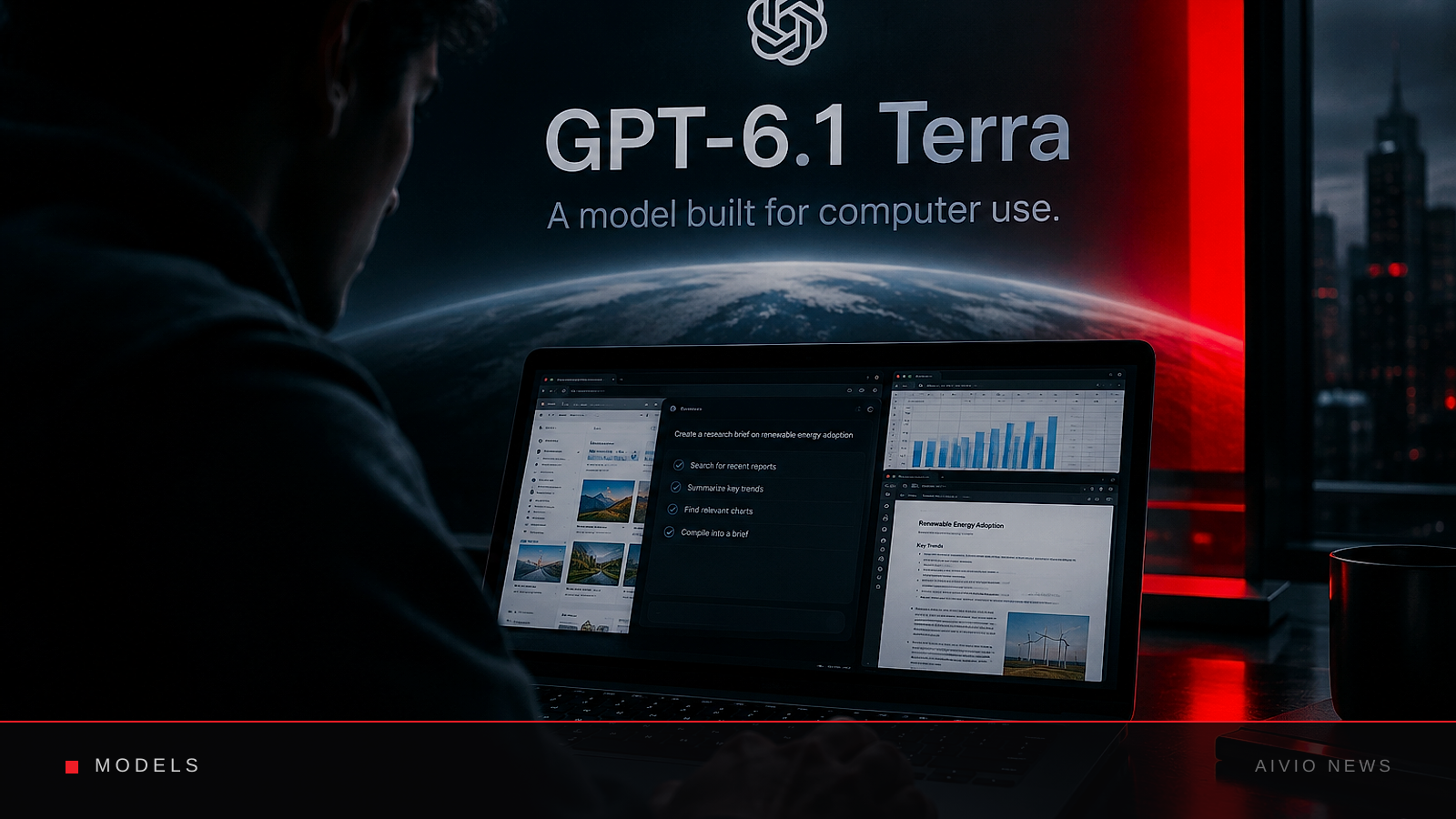
OpenAI has introduced a new model called GPT-6.1 Terra, built around what it calls computer use, software that clicks, types and navigates a screen on its own. The announcement, headlined “Introducing GPT-6.1 Terra,” carries the tagline “bringing fast and capable computer use to everyone.”
That short line does most of the talking. “Fast and capable” is OpenAI’s own description of the model’s performance, and “to everyone” signals the company wants to widen access rather than keep computer use limited to a small group of early partners. Neither claim comes with numbers attached in the announcement itself. Framing the release around reach and speed, rather than around a specific benchmark, is itself a choice in how OpenAI is introducing the model.
Computer use, as a category of AI system, means a model that operates existing software the way a person would: it reads what is on screen, moves a cursor, clicks and types, instead of relying on a purpose-built API for each task. That approach lets a model work inside ordinary applications and websites without a developer writing custom code to connect to them first.
What the announcement does not say is at least as notable as what it does. OpenAI has not published benchmark results for GPT-6.1 Terra, has not stated a price, and has not given a release date or said whether access begins through its API, through ChatGPT, or through a limited preview for select developers. It also has not explained how Terra relates to earlier models in the GPT-6 series or to any computer-use feature OpenAI has previously shipped.
Those gaps matter most to the people the announcement is aimed at: developers and other practitioners deciding whether to build on top of computer use. A model that reliably operates software across long, multi-step tasks, filling out forms, navigating between screens, correcting its own mistakes, is a different proposition from one that performs well on short demos. OpenAI’s own account of GPT-6.1 Terra so far is a name, a tagline and a claim of speed and capability, with the substantiating detail yet to follow.
What to watch next is concrete: whether OpenAI follows this announcement with technical documentation, pricing, and a specific date or waitlist for developer access, and whether it releases benchmark comparisons showing how GPT-6.1 Terra performs against its own earlier computer-use work.
Sources
OpenAI
Where these models rank: Best agent model