OpenAI unveils GPT-6 Sol and Luna, two models tuned for cost versus capability
OpenAI says the two GPT-6 variants target different points on the tradeoff between capability and cost, without detailing pricing, benchmarks, or a release date.
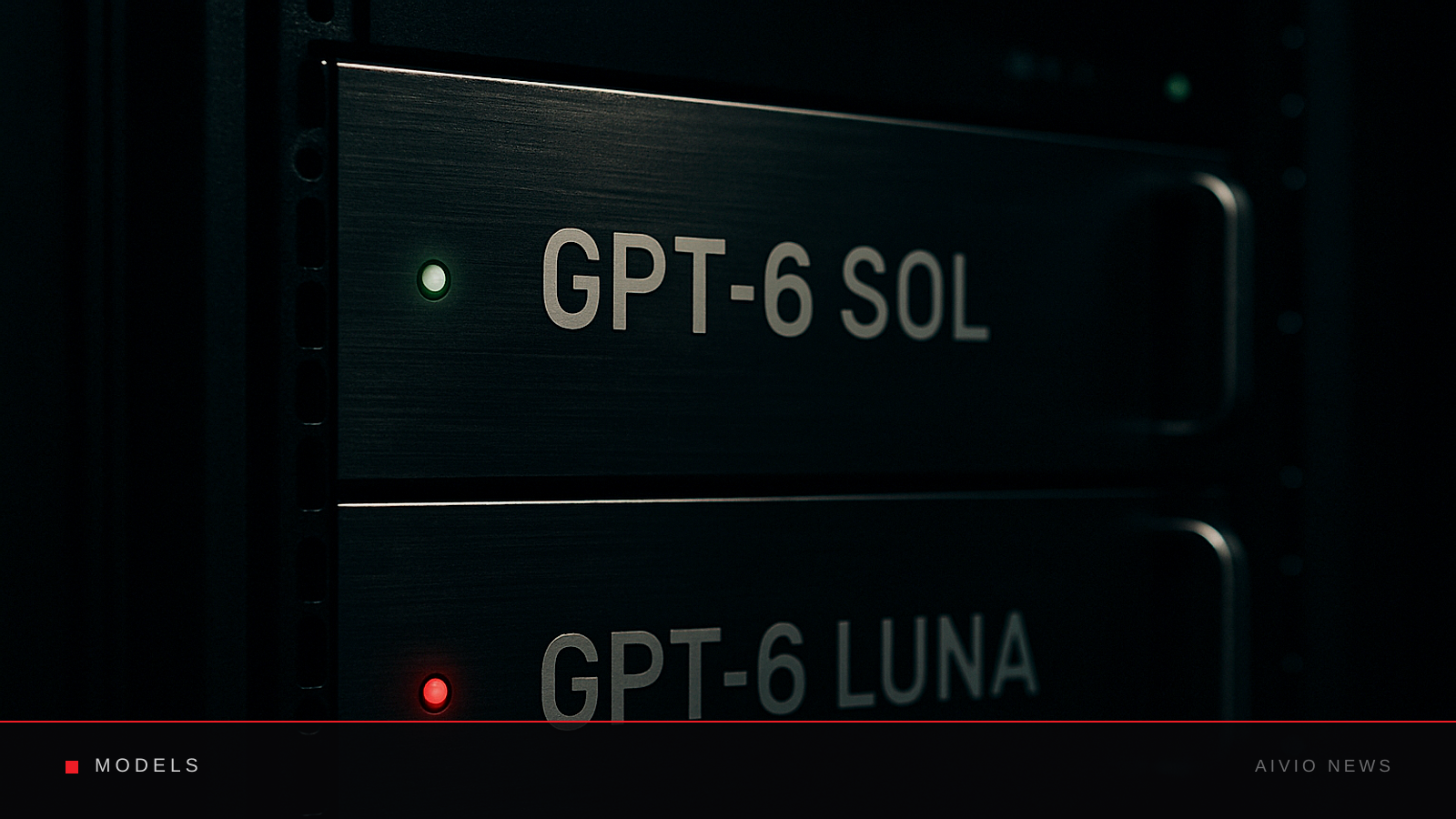
OpenAI has introduced two new models, GPT-6 Sol and GPT-6 Luna, in a short announcement posted to the company’s website. The post frames them as a pair of GPT-6 variants built for “different balances of capability and cost,” in OpenAI’s own words, rather than as a single, one-size-fits-all release.
The announcement says the two models bring “frontier intelligence,” OpenAI’s term for its most advanced AI systems, “to everyday work.” That phrasing points to routine, day-to-day tasks rather than specialized research use, but OpenAI’s post does not say what those tasks are, or how Sol and Luna differ from each other beyond the general framing of capability versus cost.
OpenAI’s text does not say which of the two is the more capable, more expensive option and which is the lighter, cheaper one. The names offer no clue on their own, and the company has not published benchmark scores, technical specifications such as context window size, or details on which modalities, meaning text, images, or audio, either model supports.
Pricing and availability are also unstated. The announcement does not give a release date, say whether Sol and Luna are live now or in limited preview, or explain whether developers can reach them through OpenAI’s API in addition to any consumer-facing product. It does not reference earlier OpenAI models either, so it is not clear from this post whether the two new variants replace, sit alongside, or supersede anything already in use.
What is confirmed is narrower than the headline suggests: OpenAI has named two models under the GPT-6 label and said they trade off capability and cost differently, and it has attached its “frontier intelligence” branding to both. Everything else, including which model favors capability and which favors cost, is something OpenAI has not yet spelled out in public.
The next confirmation will likely come from OpenAI itself, through pricing pages, developer documentation, or a fuller product post that lays out how Sol and Luna actually diverge in practice. Until that material appears, the specific strengths, limitations, and cost of each model are unconfirmed, and any claim about which one suits a given task would go beyond what OpenAI has said so far.
Sources
AI-generated · AIVIO News Desk