Pennsylvania becomes first state to mandate AI ad disclosure labels
Governor Josh Shapiro signed the Artificial Intelligence Deceptive Advertising Act on Thursday, requiring labels on ads significantly modified or generated by AI, with exceptions for parody and satire.
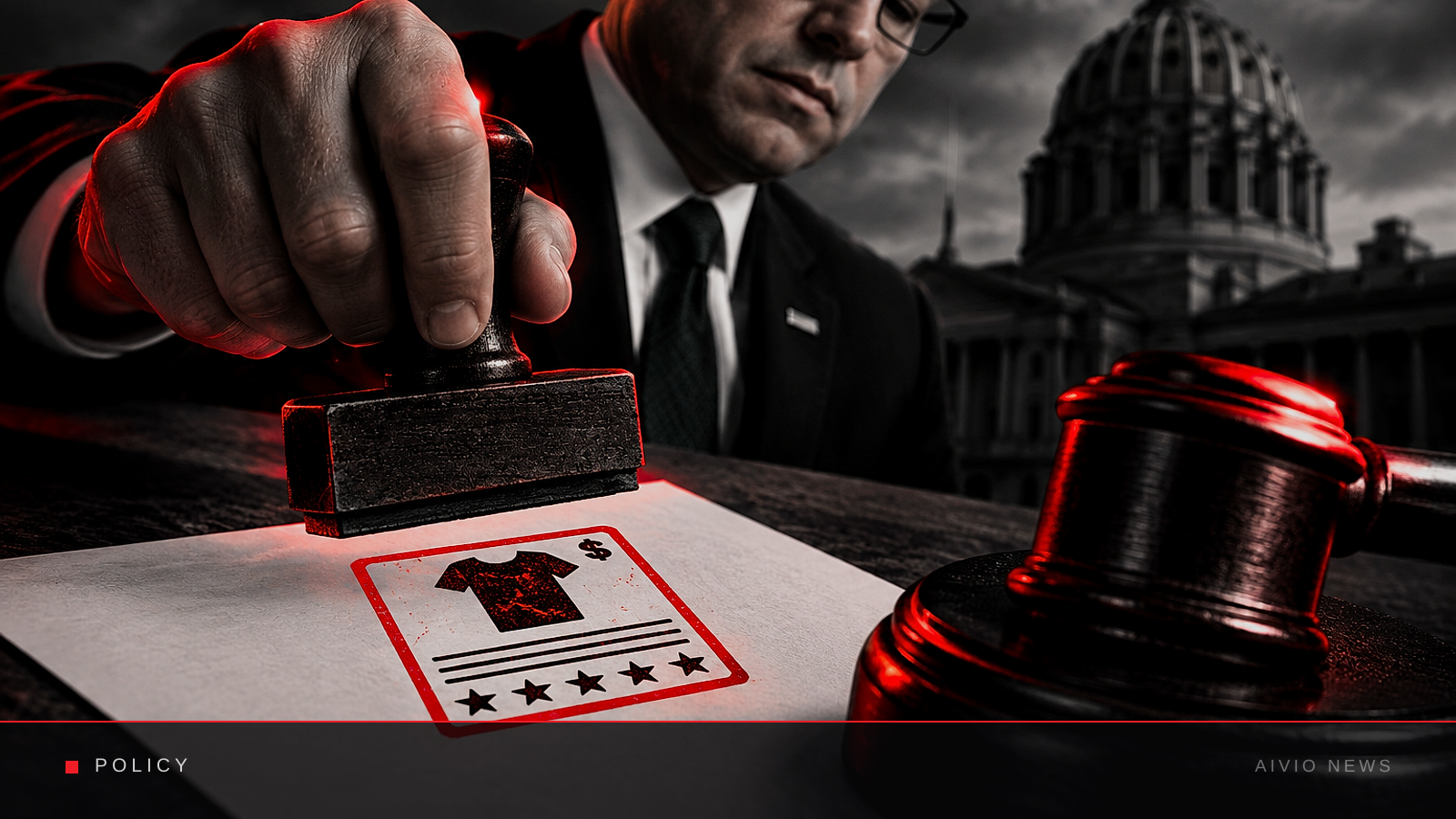
Pennsylvania Governor Josh Shapiro signed the Artificial Intelligence Deceptive Advertising Act into law on Thursday, making the state one of the first in the country to require disclosure labels on AI-generated advertising.
The law applies to any ad that has been significantly modified or generated by artificial intelligence, regardless of format. A label is required in the same format as the ad itself, meaning a text disclosure for a print ad, a visible disclosure for video, and an audible one for audio. The rule covers everything from television commercials run by large national companies to printed flyers a local restaurant hands out advertising a wing special.
The disclosure requirement is not limited to ads produced inside Pennsylvania. It applies to any ad expected to air in the state, no matter where it was created. That means viewers in other states could start seeing AI disclosure labels in commercials that were not made with Pennsylvania in mind, simply because the same ad is also set to run there.
Where the law gets vague
The act leaves several terms undefined. What counts as an ad being “significantly modified” by AI is not spelled out, and the law carves out exceptions for content that qualifies as parody, satire, commentary, or criticism, as well as anything described as “evidently fictional.” Neither of those standards is defined in the text, leaving open questions about who decides whether content meets them.
The law’s wording also ties the disclosure requirement to whether synthetic content creates a “false consumer perception” about a product or service. That framing raises its own ambiguity: what qualifies as false, and who makes that call, is not addressed. State Senator Nick Pisciottano introduced the bill, and his office did not immediately respond to a request for comment from The Verge about how those terms will be interpreted or enforced.
The law puts Pennsylvania ahead of most other states in formally regulating synthetic media in advertising, but its loosely defined terms mean the practical effect will depend heavily on how regulators and courts choose to interpret phrases like “significantly modified” and “evidently fictional.” Advertisers running campaigns that touch Pennsylvania will need to watch for guidance or early enforcement actions that clarify where the lines actually fall, and other states considering similar bills are likely to watch the same cases to see which loopholes get closed and which stay open.
Sources
AI-generated · AIVIO News Desk