Microsoft Research unveils Magnetar, a faster way to prove code ran correctly
The system proves programs written in Rust, Go, or C using only standard hash functions, and Microsoft says it runs 10 to 39 times faster than earlier proof systems in tests.
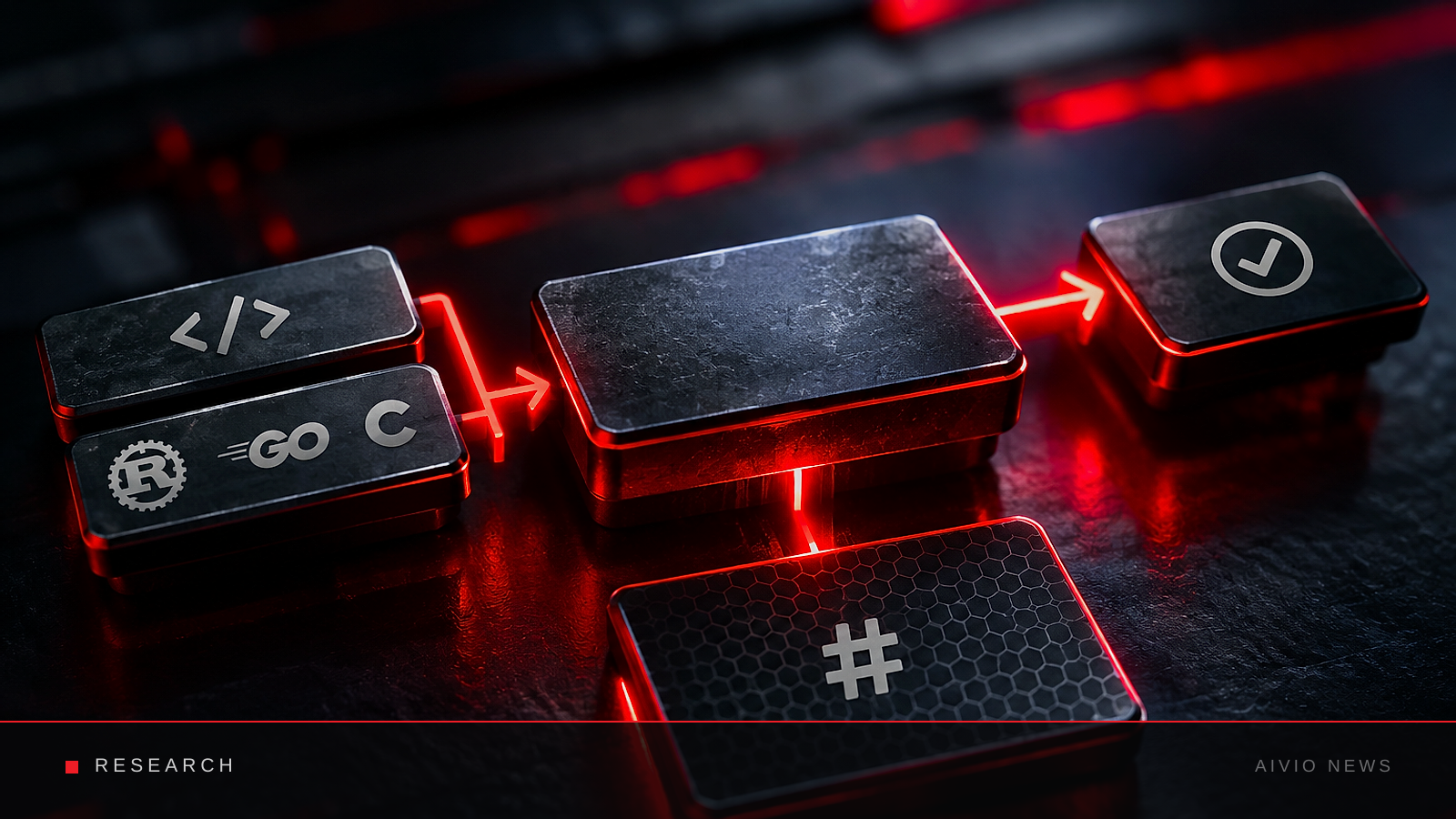
Microsoft Research has released Magnetar, a system that lets ordinary programs produce a short cryptographic proof that they ran correctly. The proof, built using a technique called a zero-knowledge proof, lets anyone check a result in milliseconds without rerunning the program or trusting whoever ran it.
Magnetar proves programs written in Rust, Go, or C. It does this by proving the execution of RISC-V, an open processor design with compilers for every mainstream language, so a developer compiles their program as usual and Magnetar proves it as written, without rewriting it into specialized cryptographic circuits.
Microsoft Research says Magnetar proves 7.2 to 8.7 million processor instructions per second on a laptop. Across 15 benchmark programs, including cryptographic hashing and token transfers inside a small interpreter for the Ethereum Virtual Machine, the company says Magnetar ran 10 to 39 times faster on average than the fastest existing zkVMs, a category of system called zero-knowledge virtual machines, running on the same hardware. On one token-transfer benchmark, it says Magnetar outperformed two other systems by more than 300 times. Verifying a Magnetar proof takes about 12 milliseconds, according to the company.
Security without new assumptions
Magnetar’s security rests only on standard hash functions, such as SHA-256 or SHA-3, the same primitives already used to protect most internet systems today. Microsoft Research says this matters because many faster proof systems rely on elliptic-curve cryptography, which a sufficiently powerful quantum computer could break, or on newer cryptographic functions and unproven conjectures about error-correcting codes that have not faced decades of scrutiny. Microsoft is separately moving its own products to post-quantum cryptography, security designed to resist quantum attacks, under a plan it has accelerated to 2029.
Microsoft Research frames Magnetar as the result of more than a decade of work on making zero-knowledge proofs practical, building on a line of systems including Spartan, Nova, Brakedown, and Jolt, each of which solved one piece of the speed, generality, or security problem. The company says Magnetar is where those pieces come together into a single system.
Microsoft Research suggests possible uses including an AI agent attaching a proof that each action complied with a given policy, or a financial institution proving its transactions were processed correctly without making the transactions public. These remain illustrative examples from Microsoft Research rather than deployed applications. A technical paper describing Magnetar’s design, security analysis, and measurements accompanies the announcement, according to the company. What to watch next is whether independent researchers or companies outside Microsoft test Magnetar’s speed and security claims, and whether any organization adopts it for a real workload rather than a benchmark.
Sources
- Proof-based general-purpose computing with Magnetar Microsoft Research
AI-generated · AIVIO News Desk