Google opens SynthID verification site to the public
The tool checks whether images, video, or audio carry Google's SynthID watermark, after a year of limited testing with journalists and researchers.
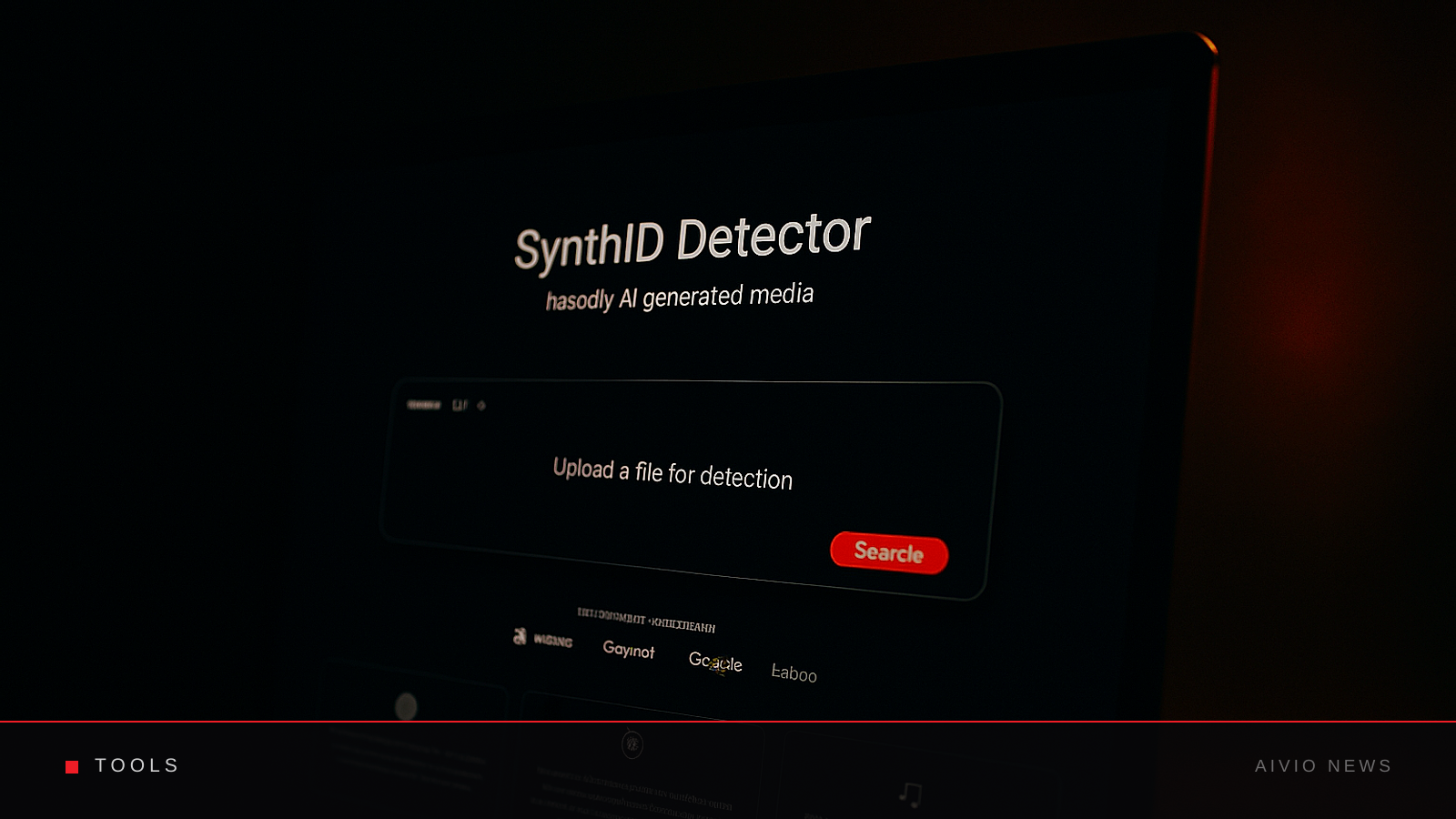
Google on Tuesday opened public access to a website that checks whether an image, video, or audio clip was made with AI. The tool, built on Google’s SynthID watermarking system, had been available only to select journalists, media professionals, and researchers since it was first shown off at Google I/O last year.
SynthID works by embedding a digital watermark, a hidden signal baked into AI-generated files, at the moment the content is created. Google introduced the underlying technology in 2023, and now uses it across its own generative tools, including the Nano Banana image model, the Veo video model, the Lyria music model, and products with generation features such as Gemini, Flow, ProducerAI, and Vids. Any file produced by those tools carries the watermark, which the new site can then detect.
The verification site accepts a wide range of formats: JPG, JPEG, PNG, BMP, WEBP, AVIF, HEIC, HEIF, TIFF, TIF, and GIF for images; MP4, MOV, and WEBM for video; and WAV, MP3, OGG, FLAC, AAC, and M4A for audio. Google has also built SynthID checks directly into the Gemini app and into Chrome, so users can verify content without visiting the standalone site. According to Google, people already make 1 million verification requests a day.
SynthID is not a Google-only effort. OpenAI, Nvidia, and Kakao also support the standard, and OpenAI runs its own separate site for checking content made with its tools. Apple is reportedly planning to add support as well, though that has not been confirmed by Apple itself.
Limits of the approach
Microsoft and Meta use their own separate standards for watermarking and verifying AI content, meaning a checker built for one company’s watermark won’t necessarily catch content made by another’s tools. Google, in its own announcement, acknowledged that none of these systems are foolproof: watermark-checking tools, including Google’s, sometimes fail to flag content generated by the very models they’re designed to cover.
That gap matters because SynthID can only confirm a watermark’s presence or absence. It offers no way to assess content made by AI tools that don’t apply any watermark at all, or ones built by companies that haven’t adopted the standard. A clean result from the site does not prove a file is human-made, only that it carries no detectable SynthID marker.
What happens next will depend on how many other AI companies adopt SynthID or a competing standard, and whether watermark detection holds up as generative models improve. Apple’s rumored support, if it materializes, would extend the standard to another major platform. For now, the site’s accuracy outside of Google’s own models, and its performance against content specifically designed to strip or evade watermarks, remains untested in public.
Sources
AI-generated · AIVIO News Desk